Titanium nanocoating technology

Tethis proprietary nanocoating technology provides a biocompatible, optically transparent, and highly stable surface, ensuring consistent performance over time and full compatibility with downstream analytical workflows.

Deposition Process

The coating is applied using Supersonic Cluster Beam Deposition (SCBD), a physical microsputtering technique that generates titanium nanoclusters and deposits them onto the target surface with nanometric precision. As a fully physical and label-free process, SCBD ensures high reproducibility and tight process control, enabling reliable batch manufacturing across multiple substrate formats while preserving surface properties.

Adhesion Mechanism

The resulting layer forms a nanostructured surface that mimicks the topographical roughness of the extracellular matrix and supports cell adhesion through a dual-step mechanism. In the first step, membrane proteins interact with uncoordinated titanium atoms on the nanostructured surface, enabling strong adsorption with potential covalent character.

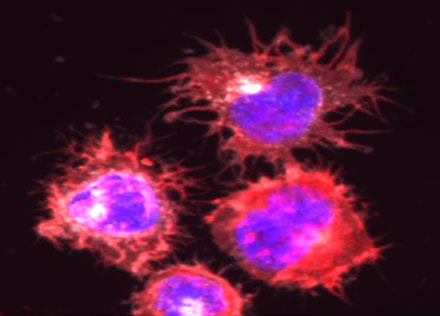
In the second step, cellular membranes and adhesion-related proteins sense the nanotopography of the substrate. This biomimetic architecture promotes cytoskeleton-mediated interactions, stabilizing cell attachment and enabling efficient adhesion even for typically non-adherent cell populations,, without the need for biochemical functionalization.

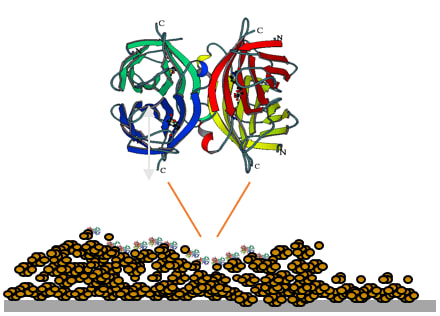
STEP 1 – Protein Adsorption

Titanium nanocoating

Proteins bind to uncoordinated titanium atoms, with potential covalent binding.

STEP 2 – Cell Adhesion

Cellular membranes and proteins involved in adhesion mechanisms, «feel» the topographical surface of the nanomaterial that mimicks the extracellular matrix, and bind through cytoskeletal interactions.

Want to partner with us?

Contact us