
What they are and why they matter
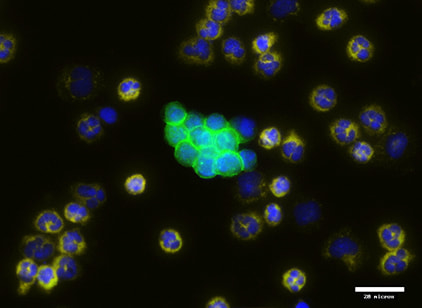
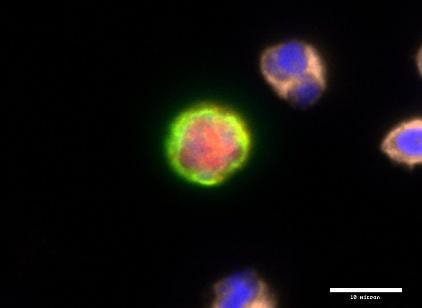
Circulating tumor cells (CTCs) are cancer cells that detach from a primary tumor or metastatic lesions and enter the bloodstream.
These cells play a crucial role in the spread of cancer, as they can travel through the circulatory system and form new tumors in distant organs—a process known as metastasis [1], [2].
Although extremely rare, often just a few cells among millions of blood cells, CTCs provide valuable insight into tumor biology and disease progression.
CTCs as a Liquid Biopsy
CTCs are a key component of the so-called liquid biopsy, a minimally invasive approach that analyzes tumor-derived material in blood samples.
Unlike traditional tissue biopsies, liquid biopsies enable repeated sampling over time, allowing clinicians to monitor disease evolution dynamically [3], [4].
Clinical and Research Applications
The analysis of CTCs has a wide range of applications in oncology:
- Disease monitoring: Changes in CTC counts can reflect treatment response or disease progression
- Prognostic assessment: Higher numbers of CTCs are often associated with poorer clinical outcomes in several cancer types
- Personalized medicine: Molecular characterization of CTCs can help identify therapeutic targets and mechanisms of drug resistance
- Metastasis research: CTCs offer a unique window into the biological mechanisms underlying tumor dissemination
Together, these applications position CTCs as a powerful tool for improving cancer management and advancing precision oncology [5], [6], [7].
Challenges and Future Perspectives
Despite significant technological advances, several challenges remain in the use of CTCs:
- Extreme Scarcity: CTCs are exceptionally rare, often occurring at a ratio of just one tumor cell per billions of normal blood cells, making detection a literal “needle in a haystack” problem.
- Biological Heterogeneity: CTCs are not uniform; they vary significantly in size, surface markers, and genetic profiles, even within the same patient. This diversity complicates identification.
- Methodological Variance: There is a critical need for standardized and validated methods across both pre-analytical (sample collection and handling) and analytical (isolation and counting) phases to ensure consistent results across different hospitals.
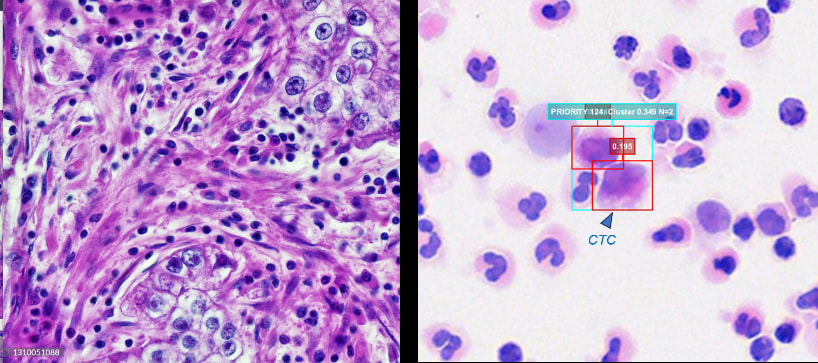
With the advent of AI-driven innovations, we can accelerate high-throughput screening, identifying and characterizing CTCs among millions of normal blood cells with unprecedented sensitivity.
The synergy between AI automation and the entire process standardization is actively driving the integration of CTC assays into valid, reproducible clinical workflows [8].
References
- Dai CS, et al. Circulating tumor cells: Blood-based detection, molecular biology, and clinical applications. Cancer Cell. 2025 Aug 11;43(8):1399-1422. doi: 10.1016/j.ccell.2025.07.008.
- Smit DJ, Pantel K. Circulating tumor cells as liquid biopsy markers in cancer patients. Mol Aspects Med. 2024 Apr;96:101258. doi: 10.1016/j.mam.2024.101258
- Yin H, et al. Liquid biopsies in cancer. Mol Biomed. 2025 Mar 20;6(1):18. doi: 10.1186/s43556-025-00257-8.
- Nicolò E, et al. Circulating tumor cells et al.: towards a comprehensive liquid biopsy approach in breast cancer. Transl Breast Cancer Res. 2024 Apr 26;5:10. doi: 10.21037/tbcr-23-55.
- Cortés-Hernández LE, et al. Circulating Tumor Cells: From Basic to Translational Research. Clin Chem. 2024 Jan 4;70(1):81-89. doi: 10.1093/clinchem/hvad142.
- Aceto N. Bring along your friends: Homotypic and heterotypic circulating tumor cell clustering to accelerate metastasis. Biomed J. 2020 Feb;43(1):18-23. doi: 10.1016/j.bj.2019.11.002
- Ring A, et al. Biology, vulnerabilities and clinical applications of circulating tumour cells. Nat Rev Cancer. 2023 Feb;23(2):95-111. doi: 10.1038/s41568-022-00536-4.
- Guo, Z., Xia, W. Isolation of circulating tumor cells: recent progress and future perspectives. Med-X 2, 28 (2024). https://doi.org/10.1007/s44258-024-00044-0